












How many nights can you actually sleep warm?
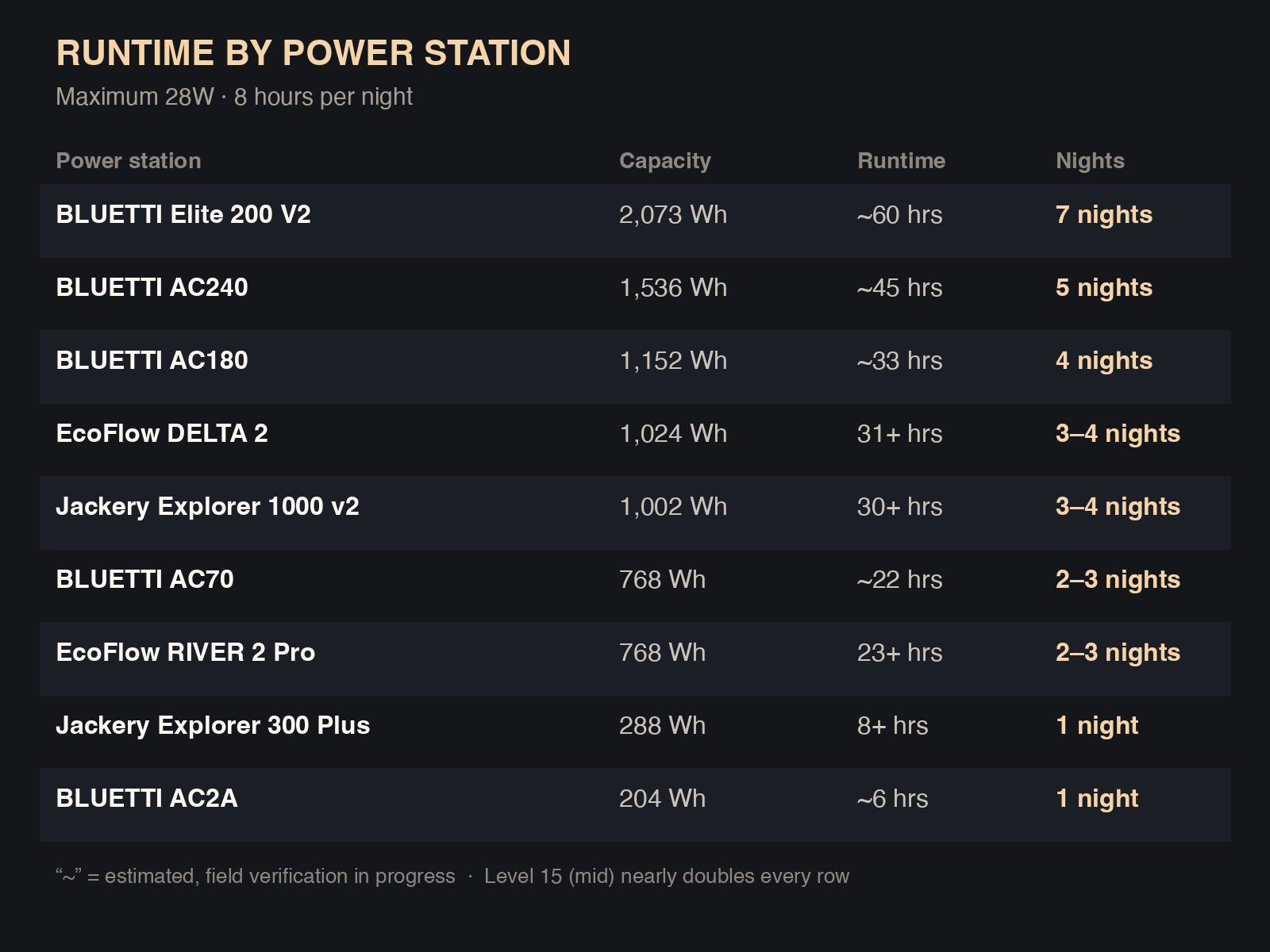
The only spec that matters in the field. Level × hours = watt-hours per night — level 15 × 8 hours is just 120Wh, so mid-range settings nearly double every row below.
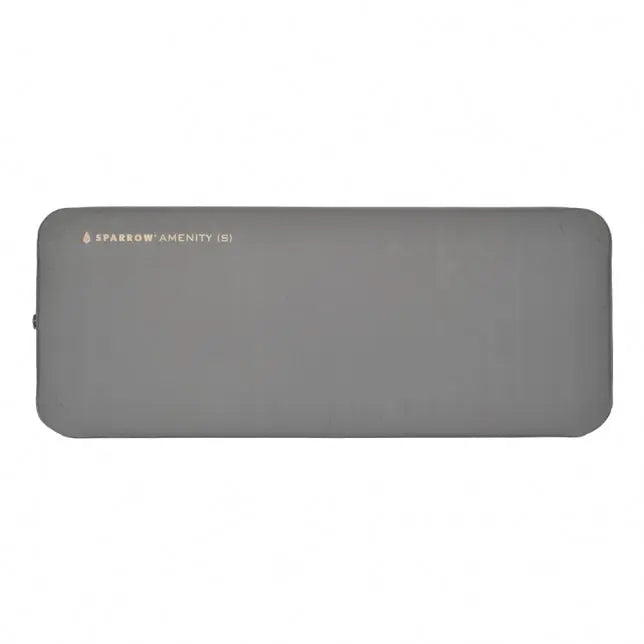
WHY THIS EXISTS
This one runs 3–4 nights on the same battery.
Ever run a heated blanket for one night and wake up to a dead battery? Then spend the rest of the trip rationing power, dialling the heat down just to make it last? That is the problem this pad was built for.
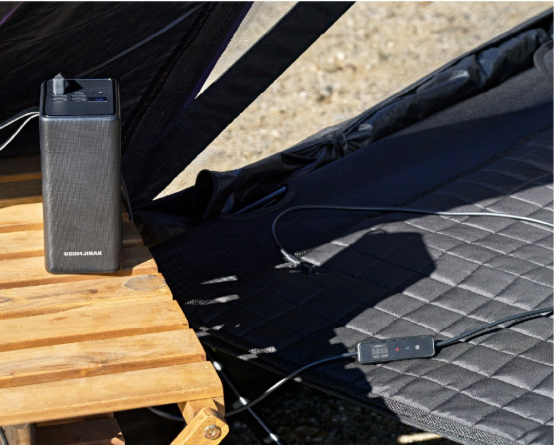
You set it in watts — level 1 to level 28, where the level is the wattage — straight from USB-C PD or a 12V outlet with no inverter in the path. It warms you by contact, under your body, where none of that power is wasted. The result is simple: a 1,000Wh station that a high-wattage blanket kills in one night keeps this pad warm for 3–4 nights.
IN THE FIELD
The only spec that matters in the field. Level × hours = watt-hours per night — level 15 × 8 hours is just 120Wh, so mid-range settings nearly double every row below.

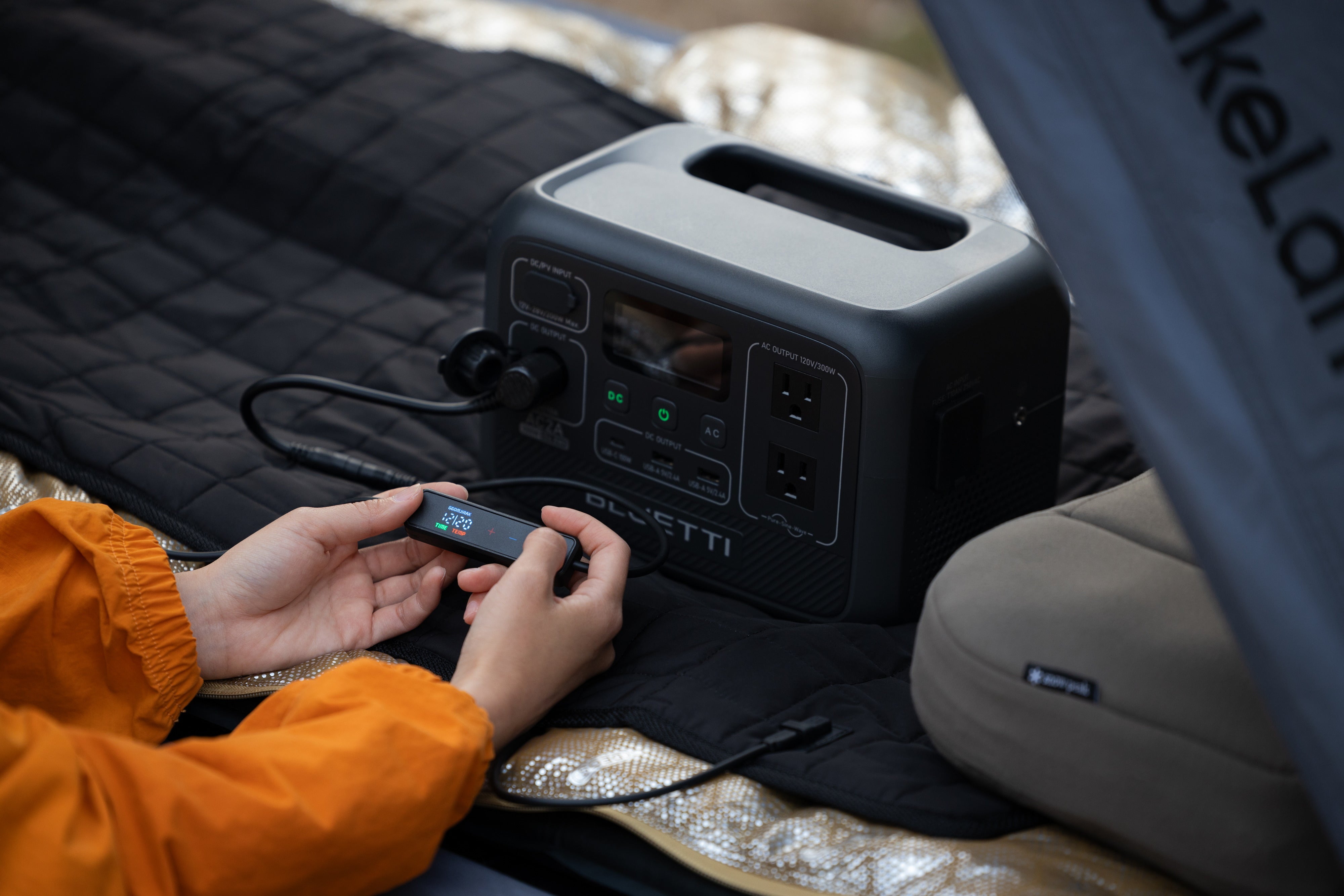
It negotiates with any USB-C PD source and takes what it can safely get — 18–19W from a standard power bank, the full 28W from a 30W+ station.

USB-C PD or 12V direct input saves up to 20% of your battery compared to running through an AC inverter.

Dial heat in 1W steps from 1W to 28W, with a countdown timer on the LED display for automatic shut-off.

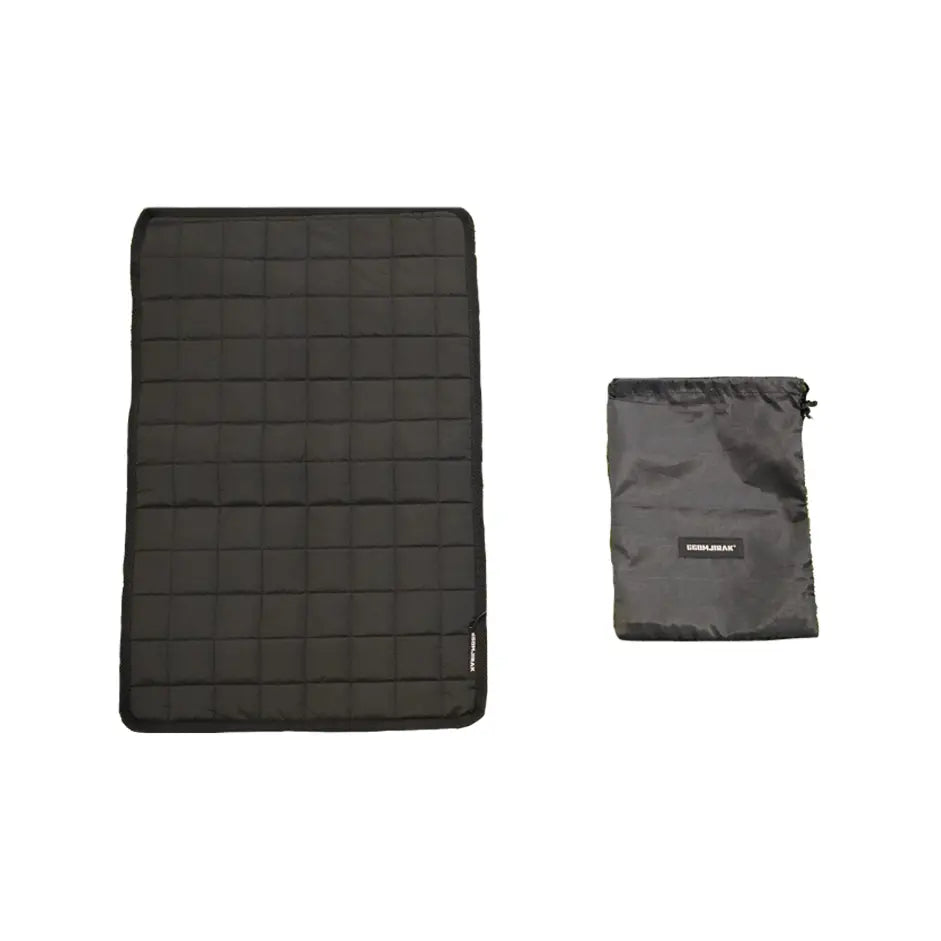
Lighter than most down jackets. Rolls into the included carry bag for camping, road trips or the back of a wagon.
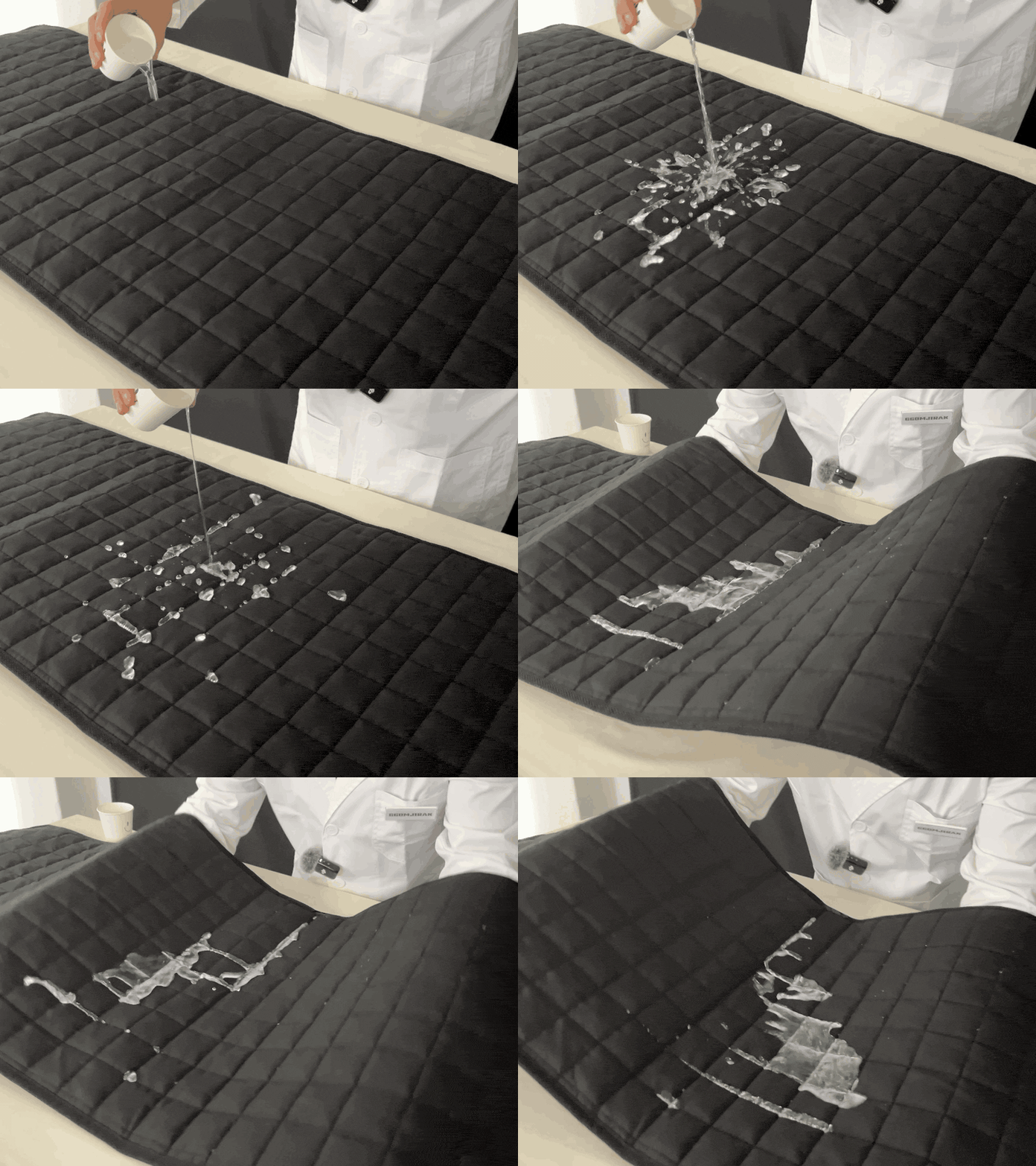
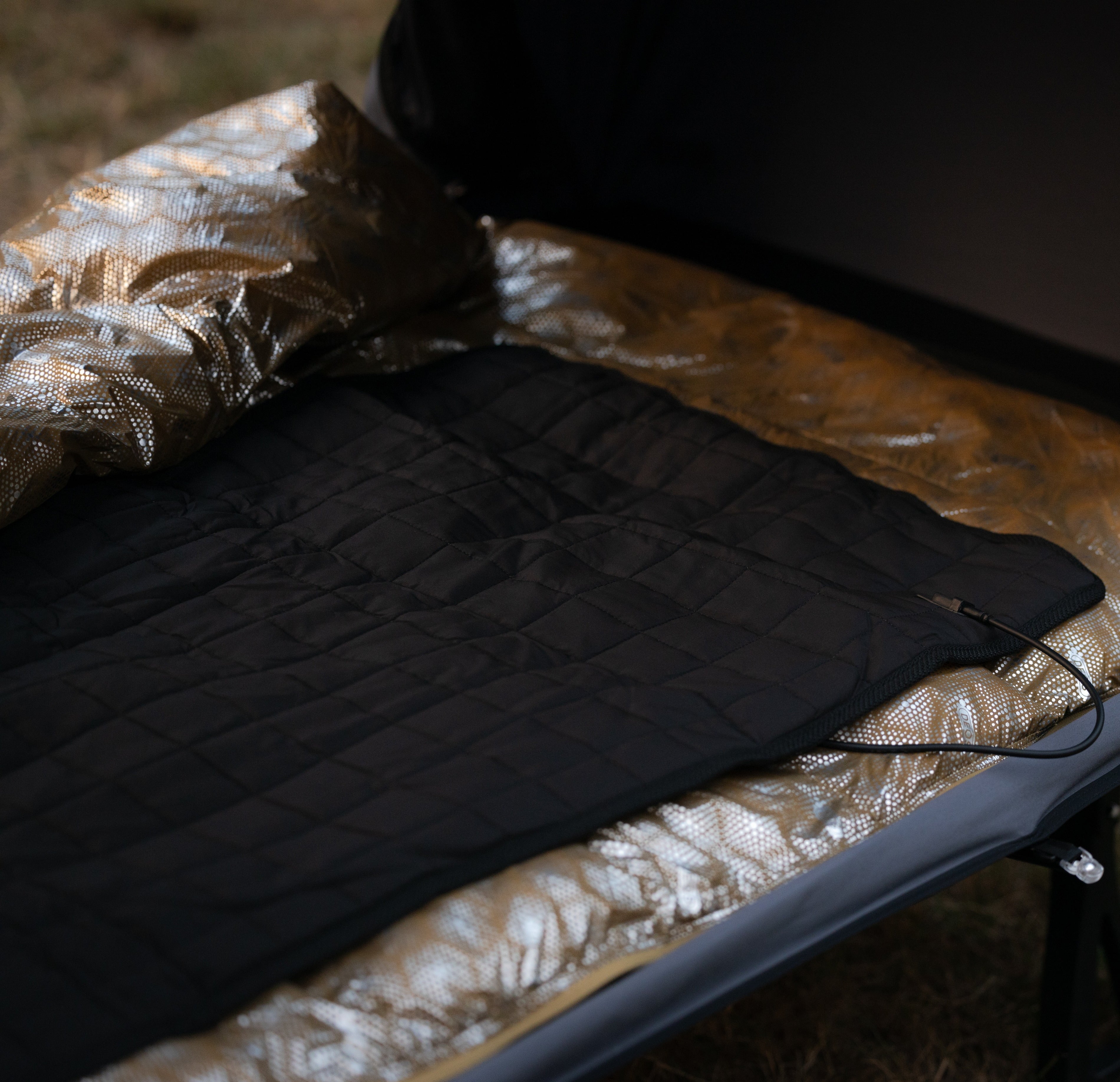
Water-repellent, stain-resistant microfiber blocks dust mites and static — and the pad goes straight into the washing machine.
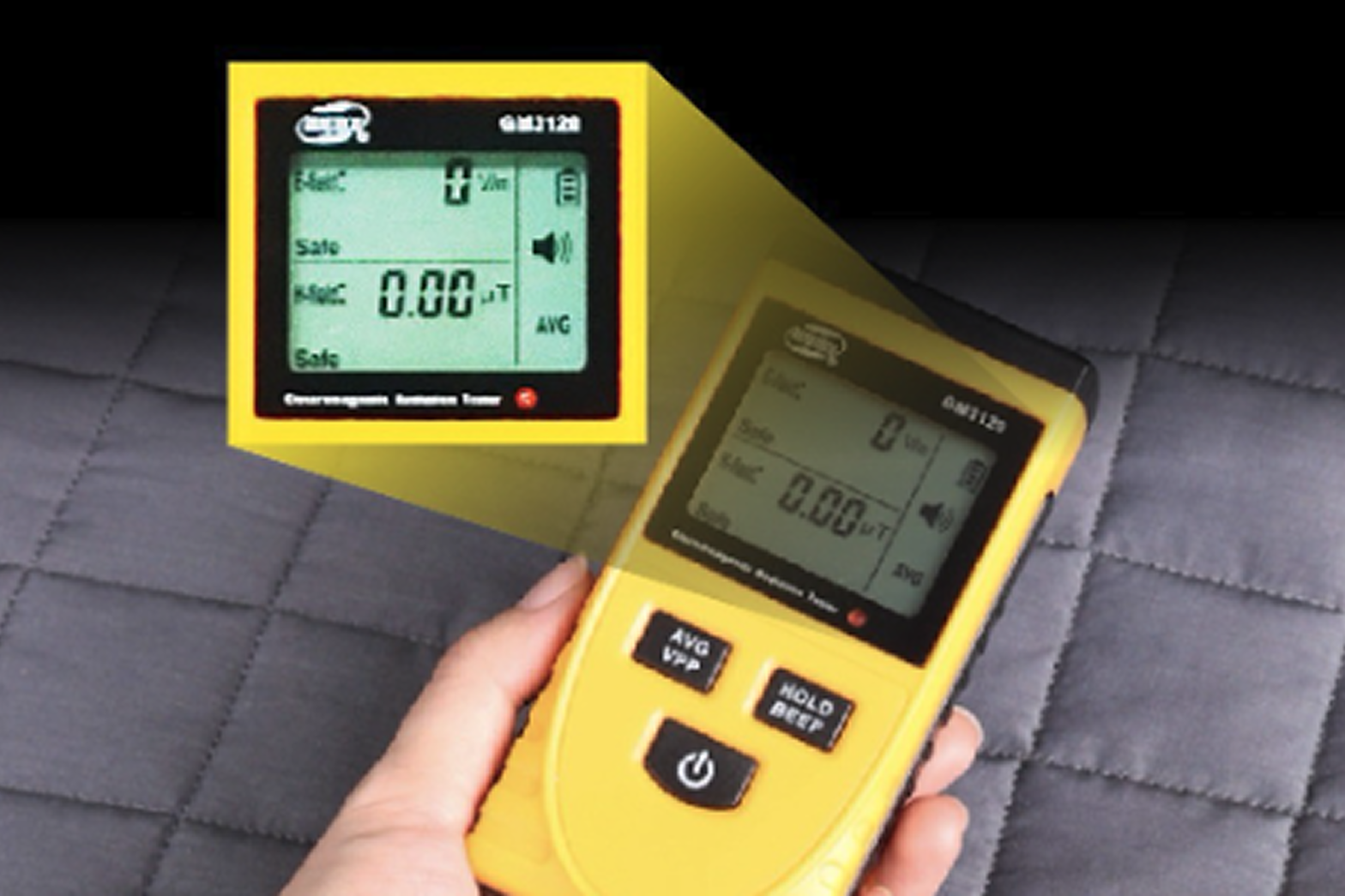
Planar carbon heating produces almost no electromagnetic field — measured at zero on standard field meters.
WHY 28W
More watts sounds warmer. In a tent it just means a flatter battery by morning.

CONTACT HEAT
Heat moves into your body by contact, not by warming the air around you. A blanket spends most of its output heating the space between the fabric and you. A pad under your body doesn't waste that.

PLANAR CARBON
Wire-heated blankets concentrate warmth in a narrow strip and leave the edges cold. A planar carbon-fibre sheet — 12,000 strands — warms the whole surface evenly. No hotspots, no cold zones, no chasing the wire.
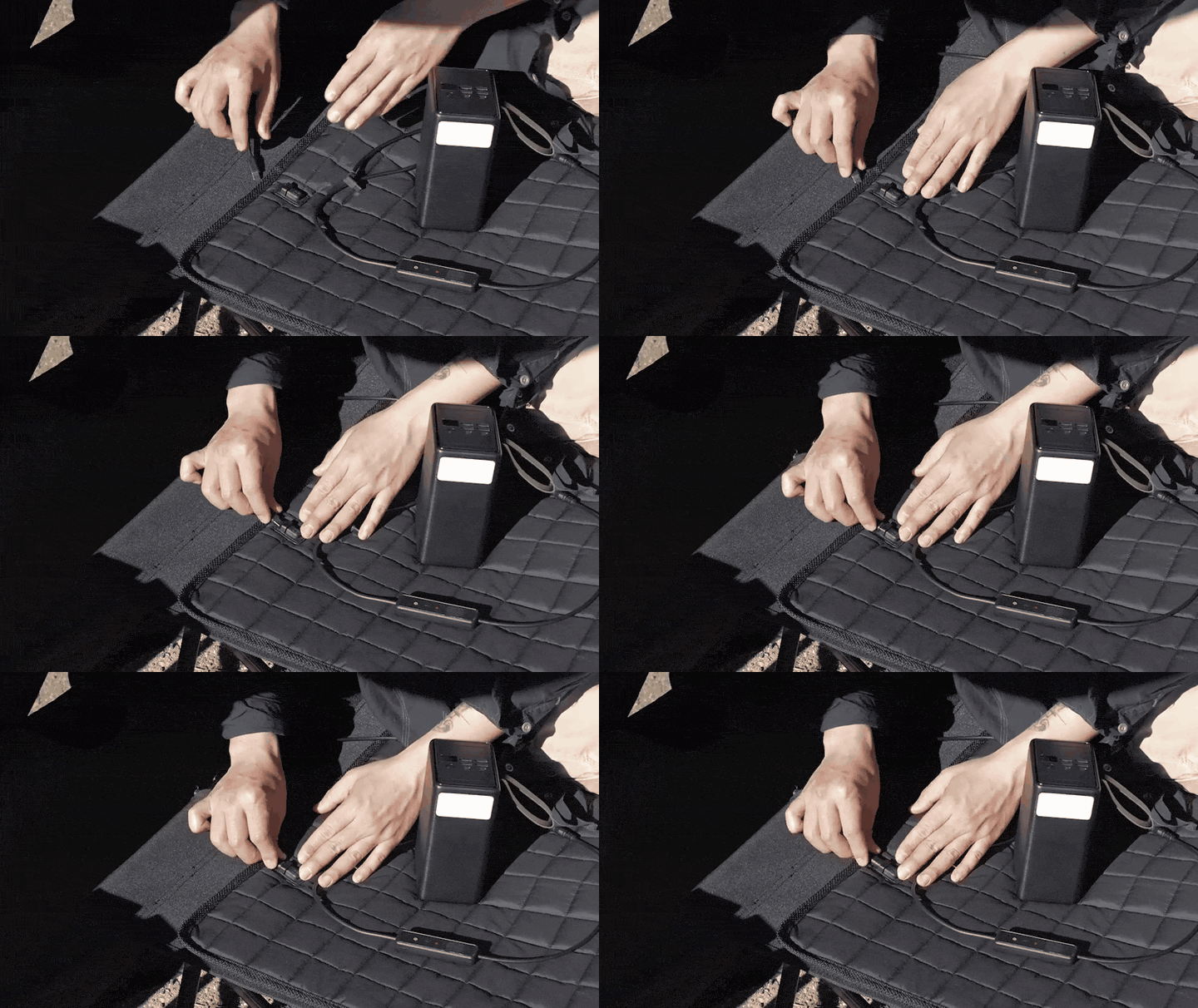
DIRECT DC
USB-C PD or a 12V outlet plugs straight into the pad. Skipping the inverter saves up to 20% of your battery, and the controller takes only what your source can safely give — which is how a 28W pad turns one power station into three or four nights.
HOW TO USE IT
A camping mat is not a home mat — and that is deliberate. A household mat carries its own insulation and draws from a wall outlet that never runs out. This one has to roll into a bag, weigh 700 grams and make real heat from a battery — so it makes heat, and your bedding keeps it.

Run bare, the heat it makes rises off the surface and is gone in minutes — you end up heating the tent, not yourself. In open air it will always feel mild. That is the design, not a fault: every gram is spent making heat, none on holding it.
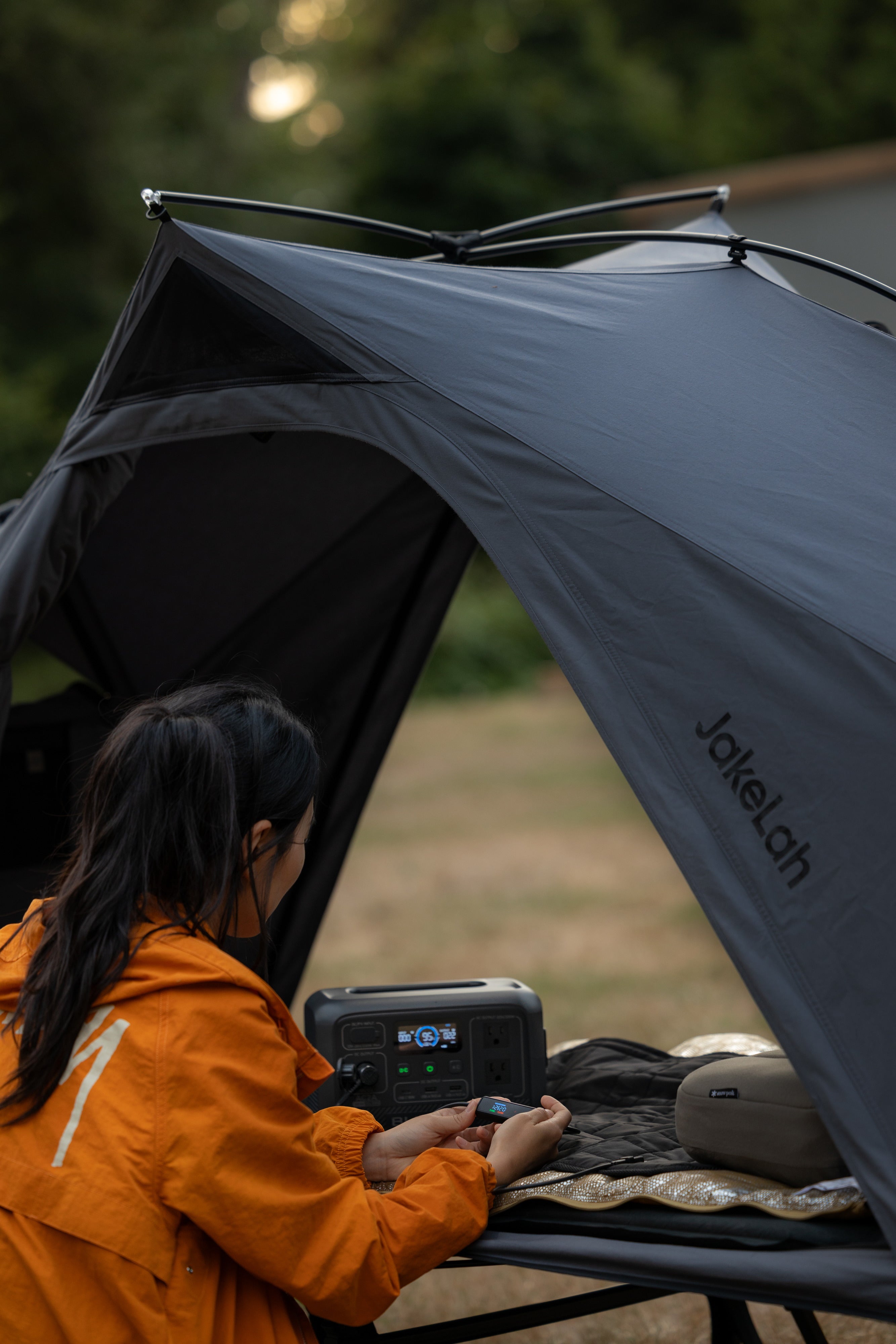
A sleeping bag or quilt above traps the heat it releases — that trapped layer is where the warmth you feel comes from. A sleeping pad or cot pad below stops it sinking into the ground. Set up this way, most people never pass level 12–15 for a full night.
| Warmth you feel | Mild | Held around your body |
|---|---|---|
| Where the heat goes | Into the air around it | Trapped in your bag |
| Typical level | Maxed out — and still not enough | 12–15 for a full night |
The pad makes the heat. Your bag keeps it. Together they cost almost nothing in watts — which is how one power station becomes four, five, six nights instead of one.
Heat setting
Level 1–28
the level is the wattage · 1W–28W, 1W steps
Source ceiling
18–19W / 28W
standard USB-C PD bank / 30W+ PD source
Runtime
30+ hrs
on 1,000Wh at 28W
Size · Weight
50 × 150 cm · 700 g
19.7″ × 59″ · 1.5 lb, rolls up
Specifications
Compatibility
At maximum 28W, 8 hours per night — Level 15 (mid) nearly doubles every row. “~” = estimated, field verification in progress. Works with any brand; no proprietary battery required.
Before you order
You set watts, not Low / Mid / High
Every other heated mat gives you three settings and no idea what they cost you. This one is set in watts. Level 1 to level 28 — and the level is the wattage. Level 12 draws 12W. Level 20 draws 20W.
That single difference is what makes a battery-powered trip plannable. Multiply the level by the hours you need and you know what the night costs you before you leave home. Level × hours = watt-hours per night: level 15 × 8 hours = 120Wh — about 5 nights on a 768Wh station. Level 20 × 8 hours = 160Wh — about 4 nights. Level 28 × 8 hours = 224Wh — 2–3 nights.
Allow roughly 15% for conversion loss and that arithmetic holds in the field. No guessing what “High” costs you. Decide how many nights you want, then set the level to fit — and if the forecast changes on day two, you re-plan in one dial turn.
Will it work with what I already own?
Almost certainly. Any USB-C PD source of 30W or higher runs the full 28W Turbo mode. A standard 18–20W power bank runs it safely at 18–19W. Any 12V outlet works too — car, van, RV or a power station's DC port, with the adapter included. Any brand: BLUETTI, Jackery, EcoFlow, Anker, Goal Zero — no proprietary battery required.
The one thing it is not built for is a wall outlet — this is a DC product by design. The controller display tells you which mode you are in: 18–19W means standard, 28–29W means Turbo is live.
One person, body width — not a blanket
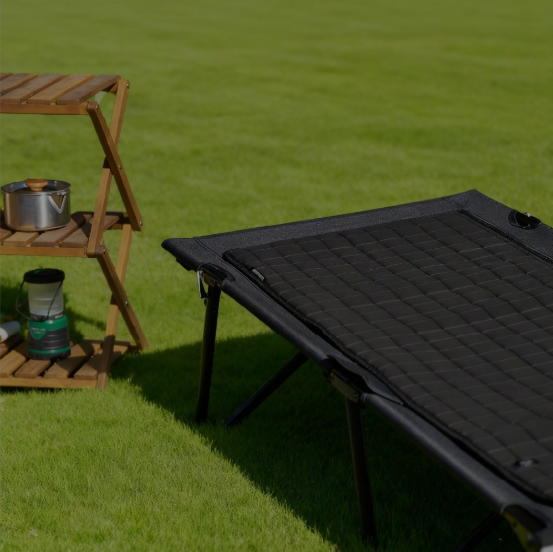
50 × 150 cm (19.7″ × 59″). This is a pad you lie on, sized to a body — not a blanket to share. It fits a cot, a sleeping pad, a rooftop-tent mattress or the back of a wagon, and rolls up to nothing at 700 g (1.5 lb).
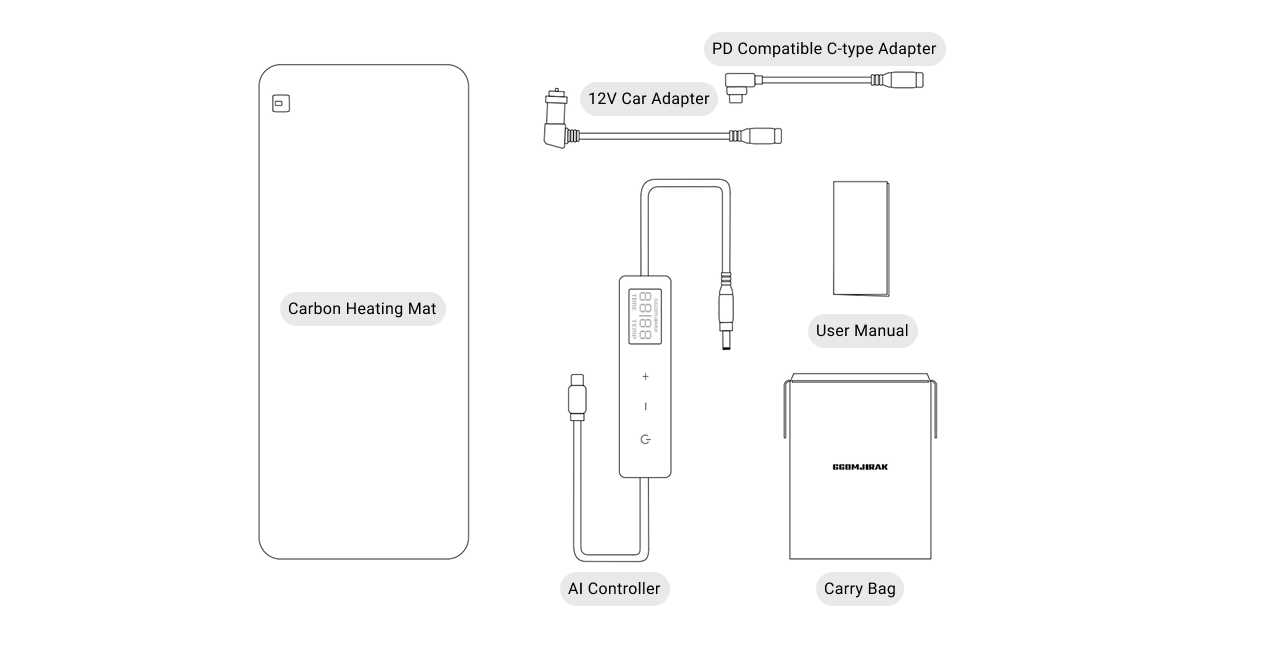
Included
Not included
No. It runs on an 18W power bank. A bigger battery just buys you more nights — see the runtime table above.
It is designed to warm you by contact, under your sleeping bag or quilt — not to heat the tent. Used that way, 28W under the body outperforms a higher-wattage blanket draped over it.
The built-in controller automatically detects the maximum available voltage and current from whatever power source you connect — a power bank, portable battery or full-size power station — and matches its output to what that source can safely deliver.
The controller display shows the active output level when you connect. Most standard power banks output up to 20W, so you will typically see 18–19W. With a USB-C PD source of 30W or higher, the display reads 28–29W — Turbo is live.
No. The heating pad is not limited to GGOMJIRAK-branded batteries. Most power banks and power stations that support USB-C PD output at 12V, 15V or 20V will run it.
The system runs multiple automatic protections continuously: over-voltage, under-voltage and over-current protection, plus heating-pad connection-error detection, with countdown auto shut-off on the timer.
Yes. The heating pad, AI controller and power adapter are tested and certified under South Korea's national electrical safety standards (KC Certification) — a national certification serving the same purpose as UL or ETL.
Because it is built to be light and to sip power, it makes heat rather than store it. Put a sleeping bag or quilt over it and insulation under it, and that heat stays with you. In open air it will always feel mild — that is the design, not a fault.
Inside a sleeping bag, most people settle at level 12–15 for a full night. Start there, and go up only if you are cold — every level you don't use is another night of runtime.
Level × hours = watt-hours. Level 15 for 8 hours is 120Wh. Divide your station's capacity by that and allow about 15% for conversion loss.
CURATOR'S NOTE
The spec that sold us is a boring one: nights per charge. We have all watched a 'warm' trip end at 6 a.m. with a dead power station. This is the first heater in our lineup where the battery math actually works — the same 1,000Wh that a high-wattage blanket drains in a single night keeps this pad running for three or four. Straight DC input, contact heat under the body, and a controller that only takes what your bank can safely give. That is the whole trick, and it is a good one.
Kevin G.·Founder · BigTent Outdoors
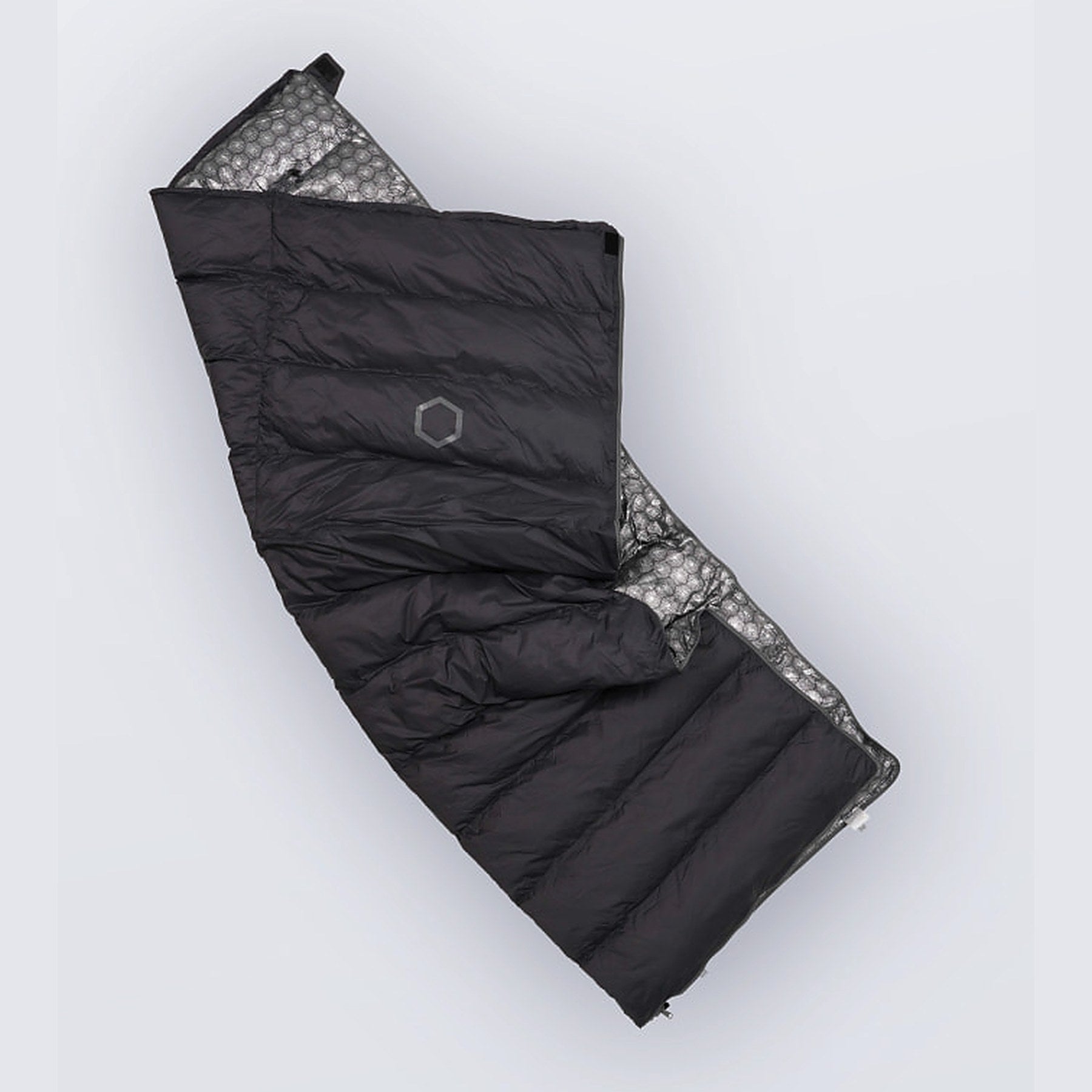
Pairs with: something to hold the heat — a down comforter over the pad, or the cushion-size Small for a chair, a lap or a car seat.
SHIPPING
Four ways to get it.
Express shipping
Air freight + ground
Recommended if you have a specific trip coming up and need it faster. Cost is calculated by package weight.
2-4 weeks
Standard shipping
Ocean freight + ground
Lower cost. Best when you're not in a rush. All duties included, no surprises at delivery.
5-8 weeks
Local pickup
BigTent Showroom, Coquitlam, BC
Pick up your order in person at BigTent Showroom, Coquitlam, BC — no shipping fee. In-stock orders are ready quickly; if an item is still inbound, we hold it for pickup and notify you as soon as the next shipment is received.
Within 2 business days when in stock
Local shipping
Ground
Ships from our BC warehouse, Canada — already in North America, so there's no overseas leg and no import wait. Orders within North America arrive with no added duties or customs fees. For destinations outside North America, the recipient is responsible for any duties or customs charges on arrival.
3–7 business days


